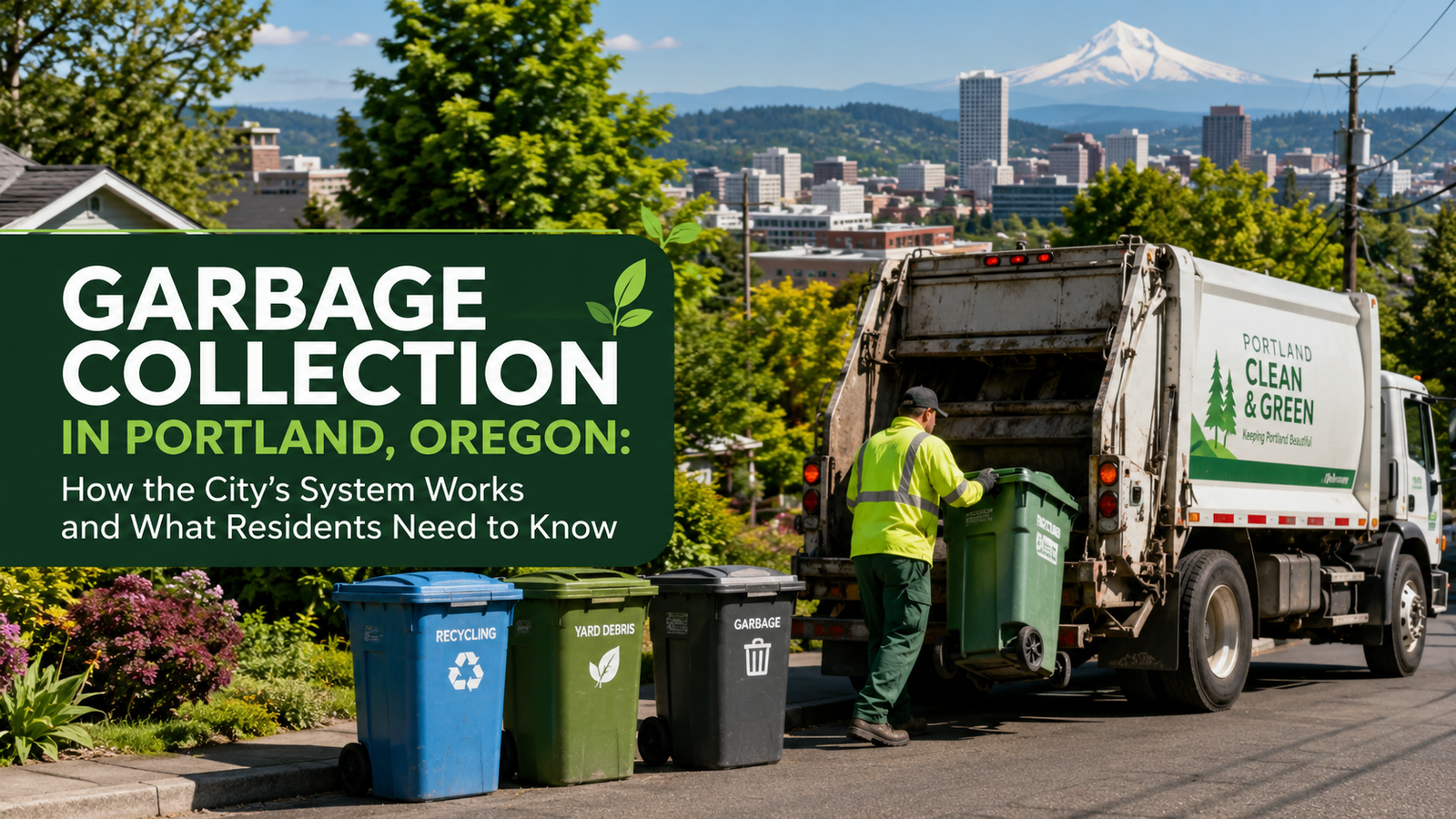
Portland, Oregon operates one of the most sophisticated and environmentally focused municipal Garbage Collection Portland systems in the United States. The City’s approach to waste management built around a four-stream curbside collection model, a strong regional Metro governance structure, mandatory composting, and active waste reduction programs reflects Portland’s long-standing commitment to environmental stewardship. For residents and businesses navigating garbage collection in Portland, understanding how the system works, what goes in each bin, and how private junk removal and debris services complement the municipal system provides a complete picture of waste management options in the city.
How Portland’s Garbage Collection System Is Structured
Portland’s residential garbage collection operates through a franchised private hauler model in which the City of Portland assigns a specific garbage and recycling company to each residential address. Rates and service options are set by the City, meaning residents have consistent service standards across the city regardless of which company serves their address. This is distinct from commercial garbage service, where businesses can negotiate with any of the permitted haulers and rates are not City-regulated.
The regional governance framework for Portland’s waste management is provided by Metro the elected regional government for the greater Portland area covering Multnomah, Washington, and Clackamas Counties. Metro manages and regulates the broader garbage and recycling system, sets the fees that fund public services including transfer stations and household hazardous waste collection, and ensures that the greater Portland region meets Oregon state requirements for reducing waste. Metro works with local governments, garbage and recycling businesses, and nonprofit organizations to keep the system functioning effectively for residents across the region.
Portland is one of the very few major U.S. cities to operate a four-stream curbside collection system separate containers for garbage, recycling, compost, and glass. This four-bin approach is distinctive nationally and reflects Portland’s prioritization of waste diversion and material quality. The separation of glass into its own yellow rectangular bin is particularly unusual it prevents glass from contaminating paper and plastic in the blue recycling cart, resulting in higher-quality recovered materials from each stream.
Portland’s Every-Other-Week Garbage Schedule
One of the most notable features of Portland’s residential garbage collection system is that garbage is picked up every other week not weekly. Recycling, compost, and glass are collected weekly on the same collection day. This schedule, which has been in place since 2011, was implemented alongside the expansion of Portland’s compost collection to include food scraps. When food scraps were added to the weekly green compost cart, the City simultaneously increased compost pickup to weekly and decreased garbage pickup from weekly to every other week.
The logic behind this schedule is straightforward: when households divert food scraps into the weekly compost bin rather than the garbage bin, the volume of material going into the black garbage cart drops substantially. Weekly compost pickup accommodates the faster-generating food scraps stream while the reduced garbage pickup frequency reflects that for most households the residual non-compostable, non-recyclable waste fills the cart more slowly than once per week. The City’s data consistently shows that households generate less garbage than recycling and compost combined, making the biweekly garbage schedule appropriate for most Portland residents.
Portland garbage cart sizes range from 20 gallons (appropriate for households generating about one bag per week) to 90 gallons (for households with more than three bags of garbage per week). Residents can change their cart size at any time by contacting their garbage company. Weekly recycling and compost collection is included in the standard garbage service rate regardless of bin size these services come bundled with garbage service automatically.
What Goes in Each Portland Garbage Bin
The black or gray garbage cart is for residual waste only material that cannot be recycled, composted, or diverted through any other available channel. The goal of the Portland system is for the garbage bin to be the last resort rather than the default destination. Recyclable materials (paper, metal, plastic), compostable materials (food scraps, yard waste), and glass all have dedicated bins and should never go in the garbage cart.
The blue recycling cart accepts paper, plastic, and metal but not glass. Items should be placed loosely in the cart, not bagged. Cardboard is accepted and should be broken down flat; extra cardboard that does not fit in the cart can be bundled and placed beside it for collection. The blue cart is for clean, dry, empty items only. Plastic bags are not accepted in the blue cart they jam sorting machinery at recycling facilities and must be dropped off at grocery store bag collection points instead.
The green compost cart accepts food scraps and yard waste together for Portland homes. This is a distinctive feature of Portland’s system in many cities, food scraps composting is separate from yard waste or not offered at all. Portland residents can place nearly all food scraps in the green cart: fruit and vegetable scraps, meat, dairy, grains, food-soiled paper, coffee grounds and filters, and eggshells. No plastic bags including compostable bags are accepted. Yard debris including leaves, grass clippings, small branches, and garden material also goes in the green cart. The material collected in residential green carts is processed into nutrient-rich compost that benefits Oregon agriculture.
The yellow rectangular glass bin is for glass bottles and jars only. Glass is sorted separately because it breaks into small particles that contaminate paper and plastic in the recycling stream when mixed. By keeping glass in its own bin, Portland achieves higher-quality paper and plastic recycling. Lids and caps should be removed from glass bottles before placing them in the yellow bin metal lids can go in the blue recycling cart.
What Happens to Portland Recyclables After Collection
After recycling is collected from Portland homes, it is transported to sorting facilities large warehouses where both machines and people work to remove non-recyclable items and sort materials by type. Paper is separated from plastic and metal. Cardboard is baled and sent to paper mills. Plastic bottles are sorted by resin type. Metals are recovered and sent to metal recycling facilities. This sorting step is critical because the single-stream recycling collection (all materials in one blue cart) must be separated into individual commodity streams before the materials can be processed into new products.
Some materials are turned into commodities used within the Portland metro region processed cardboard may become packaging; glass may be turned into aggregate or new glass products. Other materials are sent out of state or overseas to be made into new products. An aluminum can recycled in Portland can be back on the shelf as a new can in as few as 60 days. Yesterday’s newspaper may become the cereal box in a store next year.
Items That Don’t Fit in Portland’s Standard Bins
Even within a robust four-stream system, some materials cannot go in any of the standard curbside bins. Portland residents have several options for these materials. Household hazardous waste paints, pesticides, solvents, batteries, fluorescent bulbs, and similar materials must be taken to Metro’s household hazardous waste collection facilities, which serve the greater Portland area at two locations. These facilities keep hazardous materials out of the waste stream and ensure they are handled and disposed of safely.
Large or bulky items furniture, appliances, mattresses, and oversized materials cannot go in standard curbside carts. Residents can schedule bulky item pickup with their garbage company (availability varies by hauler), use Metro’s transfer stations where residents can drop off materials for a fee, or engage a private junk removal or debris removal service. Private services like Metro Junk Solutions provide the on-demand, full-service removal experience for items and volumes that the standard curbside system is not designed to handle.
Construction and demolition debris from home renovation projects concrete, drywall, lumber, tile, and similar materials is not accepted in residential carts and is not appropriate for regular curbside collection. Renovation debris requires either a rented roll-off dumpster, drop-off at a Metro transfer station, or engagement of a private debris removal company that handles construction waste appropriately.
The Role of Private Garbage and Junk Removal Services in Portland
Portland’s municipal garbage collection system handles the routine, ongoing generation of household and business waste through its structured bin and pickup schedule. But residents and businesses regularly encounter waste management needs that fall outside the standard system a garage cleanout that generates too much material for the bins, a home renovation that produces construction debris, an estate that needs to be cleared, a business relocating and leaving behind furniture and equipment, or a property that has accumulated bulk material over years.
Private junk removal, debris removal, and supplemental garbage collection services fill these gaps. They are not a substitute for the standard municipal system but a complement to it providing the on-demand, large-volume, or specialized removal capabilities that curbside service is not designed to accommodate. Understanding what the standard system covers and where private services add value helps Portland residents navigate their full range of waste management options.
Frequently Asked Questions About Garbage Collection in Portland
Why is garbage collected every other week in Portland? Portland switched to biweekly garbage collection in 2011 when it added food scraps to the weekly curbside compost collection. With food scraps diverted to the weekly green cart, most households generate less residual garbage, making every-other-week collection appropriate. Recycling and compost remain weekly.
What if my garbage does not fit in my cart? Extra garbage beyond what fits in the covered cart is generally not collected at no charge. Residents who consistently generate more garbage than their cart holds can upsize their cart or request an occasional bulk item pickup. For large quantities of extra material from cleanouts or projects, private debris and junk removal services are the appropriate option.
Can I put glass in the blue recycling cart in Portland? No. Portland has a separate yellow glass bin specifically to keep glass out of the blue recycling cart. Glass contamination reduces the quality of paper and plastic recovered from the blue cart. Always place glass bottles and jars in the yellow bin, not the blue cart.
What is Metro and how does it relate to Portland garbage service? Metro is the elected regional government for the greater Portland area, covering parts of three counties. It manages and regulates the regional garbage and recycling system, operates public transfer stations and household hazardous waste facilities, and sets the fees that fund regional waste management services. Individual cities like Portland operate their own franchised collection systems within Metro’s regional framework.